Featured

Leaders not Titles

Five signs you are a true leader!

Leaders are born, leaders are made… while the debate will go on, there is a leader in all of us for sure. The thing is – it is hard to be a leader in all spheres of life all the time. However, there are some underlying traits and behaviors that are universal. When you see these – know that it is the spark of leadership manifesting itself! So what are the indicators?

1: Seniors, peers, and people of all ranks seek you out for advice. They value your inputs and have full trust in you. They wait until you are available to coach / guide on important decisions. You get invited to important meetings and are part of high visibility projects.

2: New hires get introduced to you and are put under your tutelage. This is a big responsibility for sure – both management and leadership are trying to ensure that the future leaders are mentored by the right person. What could be more rewarding than seeing your philosophies and knowhow spread its wings within the company, and possibly beyond. When supervising others, you treat them as equal humans and not act as their “boss.”

3: You are ever willing to help others regardless of the functional silo they operate in. For you – it is about your profession, integrity, and ensuring success for all. You look beyond the petty territorial boundaries and fiefdoms that come to be in most organizations. This may even arrows being shot at you – but you ignore them with grace and stay true to your principles.

4: Your aim is not to build an empire, rather, do everything you can to move the organization forward. To that end – your efforts are not focused on acquiring more budget centers or keep expanding your team. On the other hand, the leadership sees you as capable and opens doors for you by bringing more opportunities your way. This may manifest as wider responsibilities and increased spending powers. It is possible that internal politics or other reasons may prevent this from happening, however that does not perturb you.

5: Situations where conflict arises, or where you have to compromise, you stand your ground – being assertive, not aggressive, then continue to deal with the parties in an amiable manner with parties involved to resolve the conflict. You know how to balance business needs with regulatory and compliance requirements.

These five are a sample from several that exist; I invite you to share ones you have observed.

Thanks for reading.

Rai Chowdhary

Featured

Lessons for Humanity on this Deepavali of 2020

Like most festivals of India – Deepavali too has many stories behind it. Also known as the festival of lights, one of the key messages is: May the light dispel the darkness of ignorance from our lives.

Lessons that are timeless
One story I used to hear when growing up has lessons for humanity that are as relevant today as they were millennia ago. As you read the narrative, you will re-discover lessons in various forms. The basic human failings we need to watch out for: anger, lust, tit for tat / endless cycle of avenge and revenge, jealousy, greed, blinding love, ego, and more. In addition – you will come across the good side of humanity: friendship, fidelity, virtue, integrity, fairness, sacrifice, valor, and duty, among others. Enjoy the read. Make sure to pause at the end of each paragraph to think about these.  

NOTE: The story below is compiled from information from various sources, scriptures, and my recollections.  It is possible there might be some inaccuracies – please point those out to me so I can refine it over time. The whole story is a voluminous epic, as such several details and side stories were left out to keep it succinct.

Blinding love
There was a beloved and noble King known as Dashratha; his wives were Kausalya, Kaikei, and Sumitra. Each had a son except Sumitra, who had two: Ram, Bharat, Shatrughan, and Lakshman, respectively. Rama was the heir to the throne, however, Kaikei had other intentions – that Bharat – her son be the heir and Rama be sent to exile for 14 years. She was asking King Dashratha to live up to his promise (granting her two boons) he had made at one time when she had helped him win a war.

Much to his dismay and shock, Dashratha had to concede; he did not survive the trauma and passed away. Rama together with his wife Sita, and brother Lakshman proceeded to the forest to live in exile, leaving the kingdom behind.

Performing duty with respect
Bharat was away with his uncles, and upon his return, learned of what had happened. Despite much turmoil and gloom in the family and the kingdom, his mother wanted him to be the King. Virtuous Bharat could not accept this; he set out to search for Rama and persuade him to come back. When Rama didn’t accept his pleas Bharat asked him for his sandals saying he will rule the kingdom as a custodian. Upon his return to Ayodhya, he placed Rama’s sandals on the throne and ruled the kingdom in Rama’s name.

Forces of evil manifest
When Rama was in the forest during his days in exile, a woman by the name of Shrupnakha chanced upon him and was smitten by his good youthful looks. She also noticed Sita was incredibly beautiful. Shrupnakha attempted to entice Ram, however, he kindly turned down her advances saying he was faithful to his wife and would not accept anyone else. She then attempted to entice Lakshman, that did not work either. Enraged, she attacked Sita, but got punished by Lakshman who cut off her nose.

Shrupnakha was Ravana’s sister, who was the King of Sri Lanka, a state across the sea south of India. He was a devout follower of Shiva who had won powerful boons due to his penances. He was also a great scholar having mastered several scriptures and books of knowledge of the day. Despite all this and a lineage of sages he had powerful evil sides to him – among these were his pride fed by the boons he had won, and a propensity to have relations with many women. He heard the laments of her bemoaning sister, and also about Sita’s beauty. He decided he would abduct Sita from the forest.

To do that he would somehow have to separate Rama and Lakshman from Sita so he could approach her when she is alone. Ravana then asked his maternal uncle Maricha, who was adept in the art of sorcery, to help him in the matter, threatening him with his life. Maricha consented preferring to die at the hands of Rama rather than Ravana.

The two flew from Sri Lanka to the forest where Rama  was living in exile and Maricha disguised himself as a sparkling golden deer. When Sita saw the deer – she got carried away and asked Rama to get him, dead or alive.  Concerned about her safety, Rama asked Lakshman to stay behind while he went to capture the deer. After some pursuit, Rama shot the deer, who cried out Sita and Lakshmana’s names in Rama ’s voice. Sita lost her poise and asked Lakshman to go see what had happened to Rama . Now she was alone at the hut, and Ravana appeared disguised as a mendicant begging for alms. As Sita stepped forward he kidnapped her and took her to Sri Lanka. Jatayu a divine bird accosted Ravana as he was on his way, but Ravana cut off his wing and Jatayu fell to the ground.

Recovery starts
Meanwhile, Rama and Lakshman both realized they had been deceived and hurried back to the hut. Sita was nowhere to be found. They searched and searched to no avail. During the search they came upon injured Jatayu who tells them Ravana had abducted Sita and he had gone south. But still, finding Sita was no easy task – where could she be? Help arrived – Rama’s ardent devotee Hanuman, and Sugreev. Both were monkeys with divine powers. It was Hanuman who finally found her in Sri Lanka after flying across the ocean.

Despite pleas from well wishers, and family members, Ravana held Sita in captivity, repeatedly attempting to get her to accept him. She never did. Messengers who came to Ravana with proposals to return Sita to Rama peacefully were mistreated and attacked. War was the only avenue left and a fierce conflict followed lasting several days. In the end, Ravana was killed. Eventually the exile period ended and Rama returned to his kingdom with Lakshman and Sita.

Kausalya asked her son did you kill Ravana after all? Rama responded saying I did not kill Ravana, it was his “I” that did.

Thanks for reading, Happy Deepavali.

Rai Chowdhary  

Featured

A Special Invitation… Commentators and Critics Wanted

After much struggle, I am now moving forward again to finish my book capturing 100+ nuggets of wisdom in the business and professional world. Each page in the book starts with a question and provides concise answers that are like nectar gathered from more than 300 experts in different fields.

But before I publish it, I want to invite you to be part of this journey. Contribute to reading at least five topics, and comment on the same. I will acknowledge you in the book and send you a free copy when published. See below for the list of topics and let me know which ones appeal to you. I will send you the respective pages right away. I believe this will take 20 – 30 minutes of your time.

Table of Contents / Topics

Choose any five or more, and send me an e mail at: rai_chowdhary@yahoo.com, or send me a message.

1: Quality – How to know we are good?
2: 5S – What is It?
3: Invoicing – Getting Customers to Pay on Time
4: Tardiness and Absenteeism – Chronic Problem
5: Position, Title, and Power Types in Organizations
6: Voice of the Customer – The One you did not Hear
7: First Pass Yield – The Antidote to Organizational Cancer
8: Cycle Time – Velocity for Take-off
9: Yield – A Double-edged Sword
10: Customer Satisfaction or Customer Delight?
11: Outsource or Not – A Dilemma
12: Cash Flow – The Dry Well Time
13: Warranty Costs – The Hidden Tsunami
14: Promotions – A good way to motivate?
15: Employee Health and Safety – A trust-building initiative!
16: The Risk of Ignoring Risk Analysis
17: Valuation of Your Business – Beauty to Beholder?
18: A Kaizen a Day – Keeps Troubles Away!
19: Be a Closer, not a Loser
20: Growth – The Sky is the Limit?
21: Manage Your Time or It Will Manage You
22: Competitive Benchmarking – Do it with Caution
23: Winning with Large and Complex Organizations
24: Winning with Large and Complex Organizations Under Stressful Conditions
25: People – Assets that can turn into Liabilities
26: From Prospects to Customers
27: Under the garb of Religious Freedom
28: Spending for Marketing, or for Engineering – Hard Choices
29: Three Modes of Improvement Every Leader Should Know
30: FMEA – a great tool for Risk Analysis
31: Annually Losing over 25% of our Workforce
32: The PONR – An Essential Concept for Everyone
33: Raising Money for your Startup – What are You Willing to Give Up?
34: ISO Certification – Excellence or a Piece of Paper?
35: First to Market – Chasing a Rainbow?
36: The Enemy Within – Silo Wars between Operations and Sales
37: Too many Ideas – Which one to Commercialize?
38: Employees Thinking like Owners – A Path to Invincibility
39: Seven Wastes – The Hidden Cancer Within
40: Root Cause Analysis – Myths and Realities
41: What Makes the TEAM Tick – and What Creates a Drag?
42: KPIs vs. Metrics – What do they mean?
43: Luck by SOP – What is That?
44: Supply Chain – The Essentials
45: Suppliers – Valuable Partners or Whipping Boys?
48: Sourcing Cash – Selecting the Best Option
49: Connect, Respect – Then Pitch without Guilt
50: Zero Defects – Feasible or Figment of Imagination
51: Top Three Constraints in Taking Business to the Next Level
52: Use the Funnel to Come out of the Tunnel
53: Safety by Accident, or Safety by Choice
54: Customer First or Employees?
55: Contractors or Employees?
56: Raising Venture Capital – Dos and Don’ts
57: New Hires – Get Them Started Right
58: The Mirror – It Doesn’t Lie
59: Corporate Social Responsibility – Asset or Liability?
60: Apprenticeship / Internship Programs – A Great Win-Win
61: Manage your Public Speaking Fears or They Will Manage You!
63: Put a Cap on Non-Conformances with CAPA
64: Designing Compensation Packages for High Performance
65: Mission, Vision, Values, Purpose – Glue for the Company or Empty Labels?
66: Understanding “Value”
67: Hope – Is it a Strategy?
68: Publicity That Money Cannot Buy
69: Discipline – The Bridge between Potential and Results
70: SOPs – The Arteries and Veins of Your Organization
71: Order Takers vs. Sales Professionals vs. Business Development
72: The Enemy Within – Silo Wars between Operations and Quality
73: The Cost of Decision Making
74: Yoga-3 – Going from Insanity to In Sanity
75: Let your Employees Know When to Bend / Break the Rules
76: Performance Reviews / Management – Going from Pain to Gain
77: Change, Transform, or Morph – Careful What You ask For
78: The Scientific Method – Deficiencies to Watch out For
79: Becoming Invincible with Continual Improvement – Part I
80: Becoming Invincible with Continual Improvement – Part 2
81: Meta-Learning – More Important than Learning Itself?
82: A Brand’s True Colors Show During a Crisis
83: Moats – The Boats to Survival Land
84: Habits – Make or Break an Organization
85: What does It Take to Win? Collaboration or Competition
86: Building Goodwill – A Path to Phenomenal ROI
87: Emotional Intelligence at Work
88: Simplicity – the Ultimate Sophistication
89: One of the Biggest Risks to Survival: Disruption
90: Ask Not What will Happen when a Regulatory Agency Shows Up – Work ahead on Boosting Your Company’s Immune System
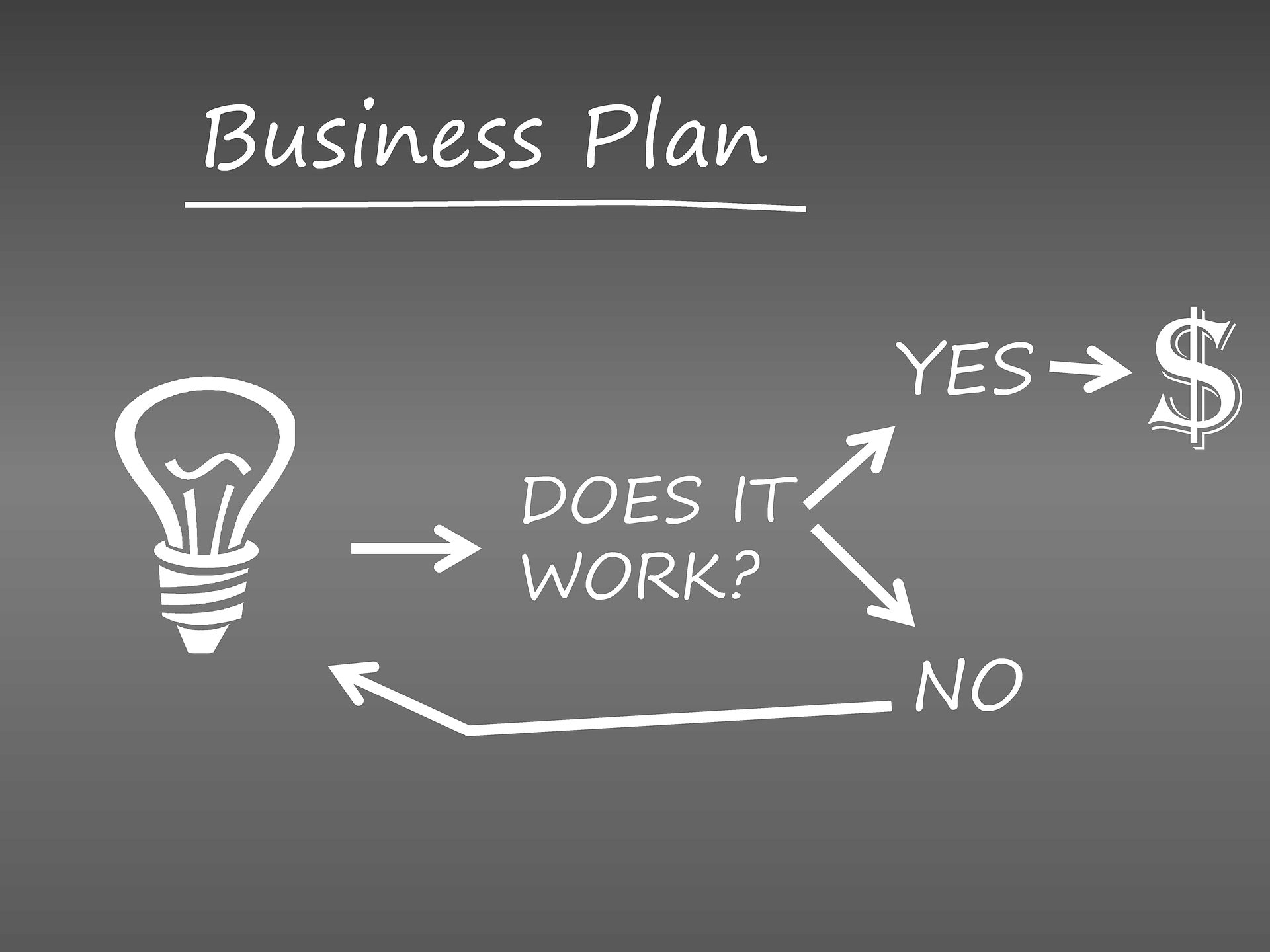
91: Business Plan – Means, End, or Waste of Time
92: Pre Money, Post Money, and Business Value
93: Every Manager and Leader’s new Challenge – Loneliness
94: So, You want Certainty? Keep Looking
95: Average People – Above Average Performance
96: Know the Type but Don’t Stereotype
97: Payment Challenges with Small / Medium Enterprises
98: The Business Cycle – Crutch or Lever?
99: The Entrepreneur with Rose-Colored Glasses
100: Success and Failure – They are Just Labels
101: Seven Signs You are in the Good Books of Your Customers
102: Timeless Business Lessons from My Dad
103: Performance Reviews
104: Disengagement: Why are Employees so Frustrated at Work?

Many thanks for your time and I look forward to hearing from you!

Rai Chowdhary

Featured

Time to re-think “Innovation, Quality, and Economy?” Welcome to a new world!

By Rai Chowdhary

There comes a time when we need to re-visit long-held paradigms, beliefs, convictions…. call it what you may. It is a period where the known rules don’t work, things “seem” to happen for reasons that defy explanation, phenomena occur taking almost everyone by surprise, and people say “never seen anything like this before.” Are we there yet? In what fields?

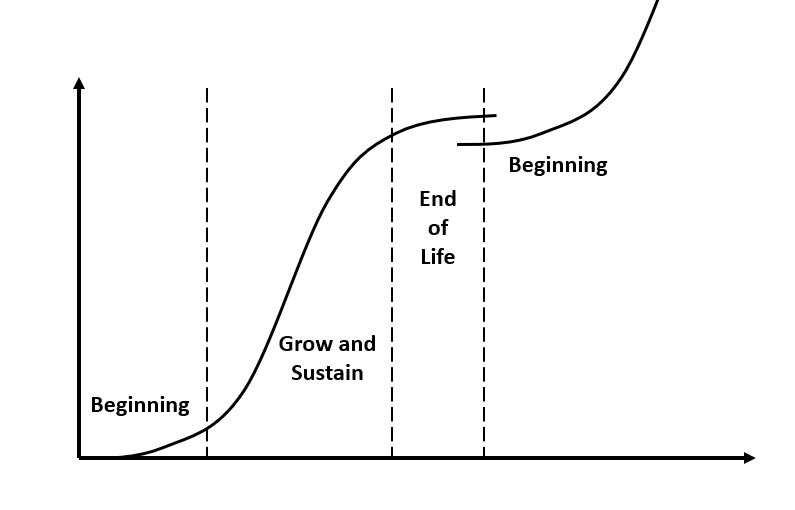
History shows we have been through many such turning points before. In some cases old ways simply ceased to exist, in others – we moved on to something new. This indicates there are three distinct phases: a beginning, followed by a period of growth and sustenance, and then plateauing out or decline / decay. The last phase can sow the seeds for new opportunities and a new beginning.

Interestingly – sages and seers from the east (Indus Valley Civilization) told us about these many centuries ago – whatever has a beginning, will go through three phases. The west refers to it as the “S Curve.”

Three Phases – Beginning, Grow and Sustain, End of Life

Given the current world scenario – many long held truths seem to be under challenge. Here are three of many I am watching (together with an explanation and the evidence in each case):

  • Good quality is an assurance your product will be really liked by customers – logically it makes sense, right? Not quite.
    (Tesla ranked lowest in quality with 200+ problems per 100 cars1, but is well liked. Sales are growing despite the car being rather pricey. It also scored the highest in customer emotional attachment and excitement2 – according to J. D. Power surveys)
  • A pandemic means hardship for everyone; therefore expect a slow housing market, and a recessionary trend in stocks. Again, this is to be expected. Reality shows otherwise.
    (as of July 2020, the COVID-19 situation seems to be getting worse in the USA; yet, we are seeing a strong sellers’ market for houses, and a booming stock market. The Fed and the governments in many parts of the world pledged to do “whatever it takes” to stem / prevent an economic meltdown. A result of printing of money in full force)
  • COVID-19 hastened the demise of some retailers while online retailers accelerated their growth. Not too long ago, consumer retail went through a massive transformation when large chain stores such as Walmart, Target, Sears, Kohls, and the like… replaced small owner-run shops. Now the hunters are becoming the hunted in a classic case of the last phase giving way to new beginnings
    (Amazon’s valuation exceeds the combined total of Walmart, Target, Best Buy, Macy’s, Kohl’s, J. C. Penny, and Sears – according to a 2017 report3)

What do wee conclude? That which was unexpected at one time has become expected now; what was normal has become abnormal, and finally – the meanings of positive and negative have reversed as well. Welcome to a new world!

Sources:

1- https://www.forbes.com/sites/bradtempleton/2020/06/25/jd-power-report-scores-tesla-a-dismal-last-yet-tesla-owners-love-their-cars/#677b8e6ca67b

2 – https://www.cnet.com/roadshow/news/tesla-jd-power-apeal-study-dodge/

3 – https://www.businessinsider.com/amazon-size-insane-facts-about-company-2017-9#amazon-is-more-valuable-than-all-major-brick-and-mortar-retailers-combined-7

Featured

Five decades later – these lessons from my dad still hold true! Happy Father’s Day

By Rai Chowdhary

Here are five of many lessons I learned from my dad as we drove around in his 1951 Chevy – visiting customers and suppliers in Bombay (now Mumbai), India. They have helped me survive economic earthquakes and tsunamis over the decades. I am sharing the same, and trust you will find them useful too.

undefined

1 – Treat your employees and contractors like family

Many business leaders will say your employees are your biggest asset; yet when business conditions go south, will not hesitate to lay them off.

When you treat employees as “part” of your family – you invest time and coach those who lag behind to help them develop. Guide them and show tough love if and when they misbehave, and lift them up when they are down.

Those employees that are more experienced can become your advisors, if you are humble and teachable. Lessons you can learn from them will save you and your company from the many storms that will rock your boat.

Then there are ones who are kind and nurturing; they will mentor others and “prevent” them from punching holes in the boat.

Rarely, but it will happen that you get a few bad apples. Find the reasons for such deviant behavior, give them a chance to self correct and get help from others in the group. If they will not mend their ways they will be eased out by the rest of the team as it stands united.

2 – Value your suppliers like your partners

Partners are treated as equals, with respect, and as confidants. You can lean on partners during good times and bad. So it is with suppliers.

They will lend a hand when the business faces rough weather and finances are tight. The supply chain will still remain in tact enabling you to tide over the difficult times.

Don’t penny pinch or drive your suppliers to reduce prices unreasonably. Take them into confidence, share with them the challenges you face and leverage their knowledge to overcome challenges, and reduce costs. Coach them if they don’t know how.

Measure their performance and reward them based on performance; but remember – metrics can have a corrupting effect. So use them carefully.

Let them guide you – where feasible – in the design / delivery of your product / service. This will deepen the engagement and create a win win for long time to come.

3 – Reduce the lot / batch size, improve first pass yield, and “prevent” defects early

Since the time of industrial revolution – goods have been produced in larger quantities. While mass manufacturing reduces cost, it can also lead to colossal waste – particularly when batch sizes are large. Smaller batch sizes enable tighter and quicker control. Defects / errors do happen; trap them quickly and as early in the process as possible.

At his factory, he instilled in his staff the importance of checking their own work before it was passed on to the next step. Any defects found were to be investigated right away and the causes fixed before any operations could resume. There were “no” final quality inspectors who acted as a police force; everyone was empowered to build quality into the product, and visual samples of what good looks like vs. what was not acceptable were available at every step in the process.

He also taught me the importance of “first pass yield” and particularly why it needs to be the highest in the steps that are (a) the most expensive, and (b) closer to the end of the line.

4 – Listen to your customer and minimize turnover

Every time I went with him on customer visits, it was a sheer delight to see how we both were welcomed by his customers. This was vastly different from what I saw happening with other suppliers.

On the way back during one such visit, I asked him why this was so. Trust, and relationships – they are two corner stones he said. Without that it is impossible to build a business. Establishing trust takes time, and a lot of active listening and responding in a helpful manner. So one has to keep working at it. Relationships get stronger with time when nurtured, and like an oak tree they can withstand high winds without getting uprooted.

Unlike many of my competitors who keep flipping one customer for another, I prefer keeping customers for life. In the long run, the deep roots matter, and you operate with a lower total cost of business. Getting new customer is not only expensive, but it is hard to tend to too many saplings – so many do not work out and even the promising ones get short changed in the process.

5 – Know your dry well time and the “cash to cash” cycle time

What blood flow is to life, cash flow is to business. Why this fact is lost to many is a puzzle to me. Time and again we have seen businesses folding up because of inadequate cash. Dry well time is simply the duration for which a business can keep doors open at a certain burn rate before the cash balance dries out completely. But this metric by itself is not enough.

One must also know the typical time it takes to go from cash to cash. Let me explain.

It takes cash to prospect, and win customers. This metric looks at the time elapsed from customer contact to receiving a purchase order, and finally to getting paid for the product or service. Few organizations measure this. Those that manage it are rarer. Business leaders should never lose sight of these two metrics.

_______________________________________________

Thanks so much dad for your foresight in teaching me important lessons early in life. Although we lost you in 1967, the memories you left behind are alive and revered. I am now passing these lessons on so others can benefit too.


Featured

Corona, Conflict, and New Concerns

By Rai Chowdhary

These days there is an eerie feeling across the world amidst uncertainties related to COVID-19 and when it will be under control. Some say it is here to stay for years, and countless millions across the world will be affected by it. That lock downs (or some variant of that) will last forever. Others predict its effects will die out or we will triumph over it, and 2021 will be a boom year for everyone. Yet others believe we should only focus on what can be done in the present and not worry about the future.

Learning from the past and using that to determine actions for today seems like a sensible path forward. But there are challenges to that.

Yet another illusion

What I am going to share with you now might be startling for some, so brace yourself.

Hardly anything is truly what it appears to be. What you are reading at this time – is in reality – a play of electrons on the screen created from the keystrokes I am using, which flow based on my thoughts. The shape of letters, and the words they make, are linked to English language and your comprehension of these is based on the database in our minds.

Further, your eyes actually see the words upside down, but your mental software makes them appear right side up. To those who cannot decipher English, these words are just marks on the screen, or on paper. So – there is more behind whatever you see / hear / learn. Much of that you cannot see.

How does this relate to Corona and what is real?

Well – what is Corona? It is the name of a flu like virus that occurs in nature. What is a virus after all? Is it alive, or just some material? The debate on the latter goes on…

Viruses are the most abundant biological entity and are found in just about every ecosystem on the planet. They are made of molecules of nucleic acids (RNA, DNA) encapsulated in a protein coat. In simple terms – RNA helps carry out the DNA’s blueprint guidelines, and there are multiple types of RNA. Digging further will take us into their structure (DNA is a double helix, where as RNA is a single helix), and elemental composition, etc….

Influenza virus – computer generated image Source: CDC

Your senses cannot “see” or “detect” a virus. To see it, you need a powerful microscope. Under that, viruses appear as particles of different shapes and sizes with spikes as you see in the image above. You cannot smell or hear them, but only “feel” the effects of the battle that ensues between your immune system and the virus.

For those with relatively weaker immune systems – the effects are severe. Moreover, high viral loads can be hard to deal with even if you are healthy. Not everyone is affected in the same way, i.e. the reality of the effect of exposure is relative.

This means it is natural to have differences between one person’s reality vs. another’s. Therefore, treating the whole population with one kind of approach makes little sense; the bigger question is whether doing so sows the seeds of conflict. The implications are far reaching and not insignificant.

Conflict – is it natural?

Look around in nature – every species acts to self preserve, grow, and multiply – starting from the simple single cell amoeba all the way to humans. This also holds for members within a given species. It is natural for a virus to do the same. However, a virus needs a host – and that can be a human or another species. Conflict starts when one species does the above actions at the expense of another – by design or by chance.

Blaming the virus for “attacking” us is misplaced; it is doing what it is meant to do. Prior to making humans as its host, Corona lived comfortably within certain animal species; we decided to add them to our lives, in some cases to the food chain. Now Corona and we humans will have to co-exist; that is the new reality.

A new concern now is if we as the human species can handle the situation without tearing each other apart using deceit, concealment of truth, and engaging in blame game. Personally, at this time I am cautiously sanguine about the ability of humans to stay united and get along with each other peacefully. However the path ahead will require us to build trust, openness, treat each other with respect and fairness. It can be done…don’t you think so?

Rai Chowdhary

Further reading:

Most abundant species on earth

How much bacteria does the human body carry?

Featured

Three Key Lessons from COVID-19 / Corona

By Rai Chowdhary

Shortly after the market crash of 2008 crash, the CEO of a Fortune 500 leader in chemicals and plastics used to tell us “Never let a crisis go waste.” While I don’t know who said this originally, it resonated with me then, and I am reminded of those words today again.

Not the first time

We have lived through a variety of crises before, and these are bound to happen again. What is surprising is that each time it occurs, we realize we were unprepared. Some may say hindsight is 20/20, but really – think about it. Was it so difficult to foresee that pathogens could easily move across species – particularly when there is close contact?

What did we learn, and will it stick?

As we look forward to a post Corona world, three things definitely stand out, and each of them can teach us valuable lessons:

1 – Weapons could not protect us. The weapon systems we have piled up across the world, including nukes that can wipe out humanity on the planet many times over were of no help

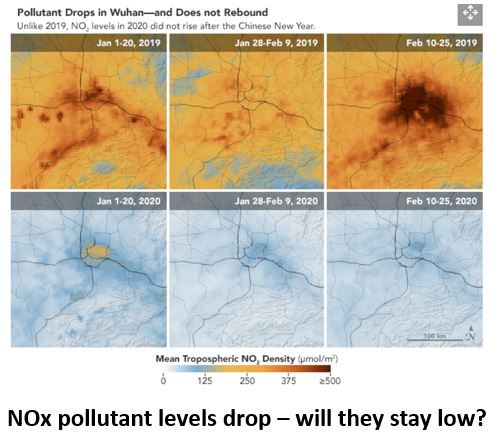
2 – The planet can heal itself given a chance. Nature started to recover from the excesses we have committed – pollution cleared up (see images of Wuhan below), wild life got a chance to move freely, and many learned the value of staying close to family

undefined

Source: https://www.livescience.com/coronavirus-changes-pollution-over-china.html

3 – Our ability to understand and manage risks is still in its infancy, not only that – almost all of us are particularly prone to herd mentality driven by an amygdala hijack – regardless of education and profession. Rational thought and analysis seemed to vanish in the wake of the dread from Corona.

Now comes the bigger question. Are we teachable? Why do I ask this question? Our history is littered with making the same or similar mistakes repeatedly. Pandemics have happened before, viruses have jumped species, and frauds have been repeatedly committed as well. In this context – what else is happening now – one may ask. China is still building coal-fired power plants. The links below provide further details for those interested. All I can say is…

Do we need a stronger wake-up call from nature?

History of pandemics

China building coal-fired power plants even now

Featured

COVID-19…Peeling the Corona Onion

By Rai Chowdhary

CoronaOnion

Last update: May 11, 2020

The nonstop drumbeat about numbers and how people’s lives are getting affected is deafening to say the least. The whole environment is full with discussion points, and an endless parade of commentators who bring on guests and push one angle or another.

How is one to peel the onion, and make sense out of so much noise and chaos?

Well it begins with good questions; those that enable us get the right answers. Unfortunately, there is paucity of this when it comes to much of media, and the leaders of several countries.

The key to gaining accurate knowledge is asking the right questions, then probing the answers…

Here are ten key questions I would be asking (picked from a longer list)…

  1. Of the population in each area, how many were tested and the basis for selecting these folks for testing?
  2. What % were exposed to the corona virus?
    (These may lead you to think we need to test the whole population – which will be very hard to do. However, a statistically sound estimate can be arrived at using a good sampling approach)
  3. Testing methods and their error rate (both – false positives and false negatives – see link below)
  4. What does each testing method tell us – that the person was exposed? That they were exposed and recovered? Something else?
  5. Of those exposed – how many (%) develop symptoms, and what is their personal and work lifestyle like? Are they a health services worker? Smoker?
  6. What are the age groups, and the existing conditions for those who exhibit symptoms?
  7. Of those who show symptoms – how many (%) require hospitalization, and how does that compare with hospitalization rates for other diseases we know of?
  8. What % of those who are hospitalized recovered and what % did not? How does that compare with other types of flu?
  9. Of those who supposedly succumbed to the virus, how many were really examined to establish that as the primary cause of death vs. the contributing condition (see link below for more information on inconsistencies in determining the cause of death)
  10. Comparison of the types of antibodies found in those that survived vs. those that succumbed

I present these to help you expand your critical thinking and realize that we need to examine data carefully rather than accepting it at face value. You may have another perspective and questions you would like to ask – feel free to share these to enrich our collective knowledge.

Data with high integrity and fidelity can represent the truth; however multiple true statements can be created from such data. A simple example is a glass is half full; well – it is half empty at the same time.

Testing methods and their error rates

Inconsistencies in determining cause of death

And lest we forget – following the herd does not mean herd immunity, and that all models are wrong – some more than others. 

May truth prevail.

Rai Chowdhary

Featured

Happy Independence Day – and a Check on Freedom

By Rai Chowdhary

Updated on July 3rd. 2020

freedom under challenge from an enemy you cannot see!

This independence day is like no other. The country (and much of the world) is reeling from the ravages of COVID-19 virus; it continues to threaten our way of life and the economy. The Fed and the leaders of the country are moving full steam ahead to stem the impact on jobs and business. Drug manufacturers are doing all they can to come up with therapeutics and vaccines, but as of now, it is hard to tell when a viable solution will be available. Meanwhile – morale swings from optimism to despair with the news of the day. Independence in these times has a new meaning – “riddance from the menace of COVID-19.”

Times like these pose more challenges for society, and create risk of internal strife. Societal fault lines can open up and lead to its dis-integration, ending up in civil wars or even the division of a country. Whether any country ends up in that predicament remains to be seen. However individual effort can play a big role in “preventing” such an extreme outcome.

individual freedoms and difficult times

If my actions get in your way, there is potential for conflict – especially if we believe we are free to act and do things our way without consideration of the impact on each other. Societies that are more open and free are fertile grounds for this happen. As such, individuals need to be more understanding and tolerant of others. This is hard to do when:

  • people are conditioned to believe that one is above another
  • there are significant inequalities in segments of society
  • systems, norms, and regulations are lax or not enforced adequately, thereby promoting the above,

It must be understood that while a regulation can be legally enforced, it still can allow for inequality to get institutionalized. Then, how are we to avoid this? The answer and the power lies in the hands of the people of the society. However, they have to be enlightened and gain independence from paradigms that imprison them. Here are typical ones:

  • my / our way is the best way
  • I / we vs. them
  • I / we know better
  • if it does not affect me – why should I care

The sooner we realize that we are all connected, and that we are not immune from facing the impact of our own actions, the better off we will be.

Now on to the post from July 2017… see below.

How free* are you – take this Test…

  1. You can choose when to work, where, and have full control over your earnings Y / N
  2. The legal system is accessible, fair, and justice delivered in a reasonable time Y / N
  3. You have freedom of movement – internationally, and domestically Y / N
  4. Freedom of expression and freedom to access information exist  Y / N
  5. You have the freedom to decide who will be your partner  Y / N
  6. You have freedom to practice the religion of your choice  Y / N

* Based on Human Freedom Index dimensions; for an exhaustive analysis, please use link provided
The more Y’s you selected, the higher the levels of freedom you enjoy.

Freedom – Fact, or Fiction

Since pursuit of happiness is common to all living species, and one attempts to find it regardless of their current state, it is common for people of a country / region to think they are free, and be satisfied with their status quo. Particularly if they have nothing else to compare with. All they know is what their government and other officials (including the media) have fed them, directly or through the media.

A research report – Human Freedom Index* provides more insights, and also indicates that economic freedom empowers individuals to exercise other freedoms – a concept I have long advocated. Interestingly enough the 2014 report shows the #1 country when it comes to the HFI is “Hong Kong,” and the world’s most powerful democracy – The USA ranks 23rd., behind Poland! Among the countries that make the bottom 10% of the list are: Libya, Yemen, Iran, Pakistan, and Chad.

So – enjoy Independence Day – but realize that freedom is not “free,” neither can it be taken for granted. For freedom to survive – democracy, responsible citizenry, and sensible choice have to be paramount in how society conducts itself. And, although you are part of society – how far you can go in shaping the future direction of your country (or company – on a smaller scale) will depend on your level of financial independence.

*Source: https://object.cato.org/sites/cato.org/files/human-freedom-index-files/human-freedom-index-2016-update-3.pdf

Featured

About 80% of What You Do – Will Amount to Nothing…

…of consequence. Yes, and I can say that with confidence, it will be lost in the sands of time without a trace. This is almost universally true – the things you do / learn / invest in / try / ….everything!

Strange, right? It has been going on for ages, and yet a vast majority of the populace (including well known national leaders) are oblivious to it – in business, and, personal life.

It started with a discovery by Vilfredo Pareto (1848 – 1923), an engineer, sociologist, and economist. He found that 80% of the land in Italy was held by 20% of the population. Since it has been found to apply almost universally it was named as the Pareto Principle, in his honor.

A lack of understanding and use of this rule results in much wasted time, money, and effort. Pitiably, even today it is not taught in most schools.  In this post, I will provide a few examples from my observations, and share ideas on how to harness the power of the 80/20 principle (aka “the vital few vs. the trivial many“).

Five Examples / Observations from Business Life

  1. 80% of the money managers failed to beat the S&P Small Cap index according to this Huffington post article.
  2. Study your company’s product portfolio – how many products bring in the bulk of the revenue? For several businesses, less than 15% of the products delivered over 90% of the total revenues. You can look at this by region, or customer as well.
  3. Look at your complaints – how many come from a given region or customer? For one computer manufacturer, about 70% of the complaints came from one region. Why? Because the power supply could not handle brown outs that were common to
    that part of the world. You can also study this on a product or part number basis.
  4. Examine your company’s financial statements – which items had the largest dollar amount? Several balance sheets and income statements I have studied showed over 80% of the listed items amounted to less than 10% of the dollar amount. Such analysis can enable focus on the highly leveraged items to improve financial performance.
  5. 68% of IT Projects fail – as is borne out by a study; you can read more about it here; and a second level of analysis can reveal major underlying causes for such failures.

Five Examples / Observations from Personal Life

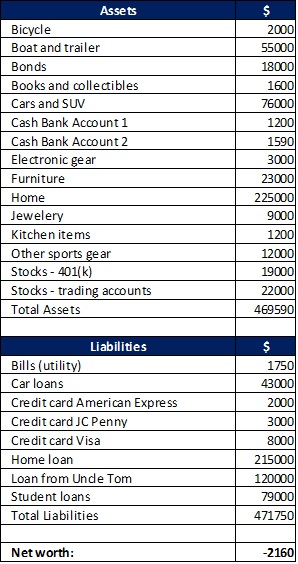
  1. If you have not prepared a statement of net worth for yourself – it is time you did. Examine it to determine which are the vital few vs. the trivial many. See below for one individual’s statement.

NetworthWorksheet

Notice carefully – again – few items add up to much of the total for both – assets, and liabilities.

More importantly, constructing such a statement enables one to see the soundness of their finances. When you examine the top three assets apart from their home, you see that they add up to $150K+, and each of them are losing assets (i.e. the value will only erode over time). And, the net worth is already negative – indicating poor creditworthiness. The situation is likely to get worse with time due to the heavy investment in depreciating assets.

2. Keep a diary for a few weeks, jotting down by 15 minute increments – honestly – what you did. Examine it after a week and add up the total time you spent on things that really matter (wellness, moving forward to your dream, raising responsible and smart kids – if you are a parent, etc.). Divide by the total available time during that period. What do you find? I would love to hear – you can write to me at rai_chowdhary@yahoo.com. All responses will be kept anonymous.

3. What percentage of the things in your purse (or wallet) are used on a daily basis?

4. Look back on your education (if you have already graduated, or if you are still in school – speak with those who have been in the workforce for 5+ years). What percentage of the total learning are you really putting to use? Is it any surprise that a vast majority of the traditional degree programs fall short of preparing you well for the workplace? Neither do they teach you how to manage your finances, and your relationships – both of which are important determinants of wellness and success in life.

5. Study your friends and social circle. What fraction can you really call as true friends? I know many people who would say that number is less than 10%; so 90% of the relationships are just for convenience sake? Now that is sobering isn’t it?

Having said all this, the question is what is one to do? Here are five ideas that will get you started:

  • Focus on what takes up your time; re-align how much time you spend on “in-consequential vs. what really matters”
  • Create a punch list – and use it on a daily basis (see below)
  • Divide your day in 15 minute or 30 minute increments and get the items on the punch list done
  • Create your own systems to reward yourself; you don’t have to wait for others to do this
  • If nothing else works – every time you begin doing something ask yourself “What is the strategic purpose? Why should I spend time on this? Which objective is this linked to?”

So there you have it; a practical approach to making every day count, rather than counting your days!

Thanks for reading, let me know your thoughts, and how did this work for you!

Featured

The Prisoner

Long time ago, my mother told me this story. I have adapted and composed from the original; it is re-produced below. 


Prison Life in Peace

Ken had been in prison for decades with no sign of being released any time soon. Jail wardens came and went, and so did other prison mates. Some passed away, some got released. But, there was no change in Ken’s plight. His court case had become like a ping pong ball between two parties, with no resolution in sight.

Then one day – a young man was brought to his cell. This guy (Jim) has been arrested for assaulting a family member and resisting arrest. We are locking him up in your cell hoping that he can learn somethings from you, the warden said, complimenting Ken for his good behavior over the decades. He thinks because he is the son of a high ranking politician, he is above the law.

Ken welcomed Jim and hugged him with compassion – without asking any question or saying a word. Surprised Jim asked – you don’t even know who I am, and are welcoming me with open arms, how so? Ken simply said – I know who you are, and I can see the real Jim. At the core – we are no different.

Days went by; Ken and Jim grew closer – exchanging ideas and views on a number of topics. Surprised that Ken did not have much remorse, or show any signs of anger, pity, or lament on his condition he asked what was his secret to stay peaceful and smiling. Doesn’t the prison bother you he asked.

The Dawn of Awareness

This prison is nothing compared to the ones we build upon ourselves, Ken replied. Each one of us has made several prisons with multiple walls – some are easily seen, others are so subtle – we don’t even know they exist. Those prisons are more suffocating to me than the one we are living in right now. Jim was utterly confused and his looks reflected that. I will tell you more about this when the time comes.

After a few days, things took a positive turn. Ken was informed that he was to be released next Wednesday; interestingly enough, Jim’s release date was set for the same day as well. On the day of release, the state gave Ken a lump sum of money as living expenses for 3 months and set him free. Not having a family, or any one to turn to, Jim invited Ken to stay with him until he could get on his feet.

On the way to Jim’s place, they passed a pet store that specialized in exotic birds captured in the wild – Rainbow Lorikeets (a type of Parrot),   Macaws, Kingfishers…over a dozen species could be found. Ken bought them all and set them free. Jim could not believe his eyes – how can you do this?

The Rainbow Lorikeet
Enter a caption

Rainbow Lorikeet
Picture source: http://www.oddee.com/item_98487.aspx

Did you like getting out of the prison today? Ken asked. Of course; I am delighted to be free. Now I can get back to work, manage my dad’s office, resume the role of Vice President for his business, drive my Rolls Royce, and live in my mansion. These are things I absolutely relish and can’t be without.

Just like you, these birds are now free from their prison. The only difference is – you have come out from one prison and are about to walk into several more, Ken said. Bewildered – Jim asked – what do you mean by that? How am I walking into more prisons?

Look at the birds flying away; do they know any boundaries? Do they care if they are in your country or the neighboring one? Do they worry about their title? Their possessions? The cage they were in – was the only prison in their life. Now they are free, and living in joy. That is what we are at the core as well. We humans – despite the advanced intellect – create and live in more prisons than we realize. They come in different forms and tie us down: labels and titles we attach to ourselves, possessions we build and crave, roles we adopt, etc. Each becomes a prison, or a wall of a prison, eventually burying our true self.

Ah – Jim said – that is what you said on the first day we met: I know who you are, and at the core we are no different. Now I can see for the first time – how we become enslaved due to attachments, and also realize the fact that everything is transient. So, I guess – the way to deal with all this is to become the seer, one who sees what is going on, rather than get entangled in that which is ephemeral. Now that would be the right use of our intellect, isn’t it?

Exactly!

Adapted from the original, and composed by Rai Chowdhary

Featured

Action, Reaction, and The Poisoned Paratha (Tortilla)

Several decades ago, Leela – a woman from a small town in India lived with her family of five close to the river Godavari. Her husband had a little farm and some livestock that barely sustained the family’s needs. Most of the time they lived hand to mouth, and Leela would make sure no food was thrown away. Any left overs got rolled into the dough Leela used to make her special stuffed triangular tortillas (parathas). Out of her goodness she would always made an extra tortilla – to feed the needy on a daily basis and kept it outside their window just before noon, for whoever might need one.

The truth can be bitter…

Chandu, a crusty old humpback who passed by their house every day noticed this and started helping himself to the tortillas regularly. Rather than be grateful and expressing thanks, he would pass a terse comment as he picked up the tortilla: “Your wrongs will stay with you, and haunt you; while the good deeds will return as positives in your life.” Leela heard this and ignored it remembering Kirit, her son – who had been gone too long. How joyful he would be if he was here, it was his nature to help others she would think.

Months went by and Leela became increasingly irritated with Chandu’s unending tirade. Unable to stand the perceived insults to her ego, she decided to teach him a lesson. She made a tortilla laced with poison, thinking that would be a befitting response to Chandu’s thanklessness. As she went to place it outside the window, inexplicably, she broke out with cold sweat and shivers went up her spine. Realizing her folly – she tossed the poisoned tortilla in the wooden stove and burnt it to ashes. What was I thinking, what was I doing – she muttered to herself. Repenting, she made another one in its place, while still plotting to get even somehow.

The sweetness is latent – behind the bitter words…

Chandu came by, picked it up as usual, and moved on; Leela continued with her chores and tending to her family’s livestock. Something just did not just feel right though, and occasional shivers lingered on. It was late afternoon, and the day seemed to drag. To calm herself down she went back in the kitchen to make her favorite Darjeeling tea. Just as she was getting started – there was knocking at the door. Mom, it’s me, Kirit.

Leela could not believe her ears. Kirit! “My son is back” – she ran and hugged him, tears of joy rolled down her cheeks. He was disheveled, and his clothes were torn, but that didn’t matter, he was back, alive, and well. After he freshened up, the two started to prepare supper; Leela was looking forward to re-living the experience of having the “whole” family at the dinner table again. As she made tortillas – Kirit narrated his experiences. He told her of his travels and tribulations over the last several months; places he had been to, and the storms he had survived. Godavari can be a challenging river especially when you are rowing a flat bottom boat, he explained. Finally he came to the episode that had unfolded moments ago.

Having gone without food for days, and being out on the river in the blazing sun, I was dead tired, he said. Reaching ashore, I moored the boat and made my way up the hill. Unable to walk anymore, out of hunger, thirst, and exhaustion I collapsed about a mile from our house. Luckily – a crusty old and frail humpback, who looked like a beggar, seeing me on the ground came to my rescue. It was he who helped me regain consciousness. He was so nice – not only did he bring me some water, but he also fed me the only tortilla he had. It looked exactly like the triangular one you are making now. I asked him from where he got it, and why he didn’t eat it.

There is this noble woman, about a mile from here he said. She makes one for me every day; today you need it more than me. I can go hungry for now. Looks like you haven’t eaten for days, so here, take it.

The awakening…

Leela was stunned, speechless, trembling, and sinking as Kirit finished his story. He held her tight asking what had happened. What was wrong? After a while Leela responded – “I am just so thankful to god you are alive; things could have taken a very bad turn today. A wise man has been telling me that our wrongs will stay with us and haunt us, while the good deeds come back as positives in our life.” Touched by these poignant lines, Kirit asked “What wrong did you do? And, how can I meet this wise man?” Leela said “he will be back tomorrow afternoon, you can meet him then. What I have just realized is things are not what they appear to be, our egos hijack our lives and run on auto-pilot for the most part. We need to learn how to control our responses (reactions) to stimuli (actions of others and triggers) rather than try to control the latter.”

The next day Kirit saw the whole series of events first hand. Chandu recognized him as he passed by the window; Kirit stepped out to greet and thank him for saving his life – offering him money in return for his help from yesterday. Chandu just smiled and said – if you reciprocate what I did for you with someone else, just one good deed a day – that would be reward enough for me; remember, he continued – your reaction to the actions you encounter in the world are an indicator of your true core, strength, and character. Hearing this, Leela came out with folded hands, and humbly said “we are blessed to have you come by every afternoon, and it is an honor to serve you.”  Chandu said so be it, and moved on. Leela and Kirit watched as he disappeared over the horizon. His parting words were “what we eat today, will eat us one day.” Both wondered – what does that mean, and, if they would have to wait for another episode to unravel that?

Rai Chowdhary

This is another story sent to me by my sister – the original was in Hindi; I have translated it and made some additions to the contextual settings for better impact. Let me know your thoughts.  

Featured

Lessons in “Identity” from a bunch of Grapes!

Let me start with the story my sister sent me yesterday. A shopkeeper was selling grapes – some were in bunches, others were loose and were being offered at half the price. A woman became curious about the price difference and asked him what was wrong with the ones being sold loose?

Nothing – replied the shopkeeper. The type and quality of both grapes is identical as you can see; the loose grapes are not part of the bunch, and therefore have no identity anymore; as a result they have lost their worth.

This was stunning; how and why could identity matter so much? Is being “attached” or “belonging to some group” so important? Is there a lesson here that we need to learn? The topic of what really constitutes our identity is rather deep and complex – with several books being written on the subject. I will touch on just a few aspects – and invite you to share your thoughts.

Identity – What is it and why is it necessary anyway?

Let us take a closer look at “identity” in a couple of ways…

We identify ourselves using various descriptors – which include professions, places, communities/families, symbols of wealth, religions, etc. Thus it is common for us to say I am an American, an engineer, and I come from the royal family…etc. It seems to create a sense of certainty, belonging, power, ego, helping project to the world (and ourselves) – “who” we are, and by extension what we stand for. Is this somewhat akin to grapes being attached to a bunch?

The Social Angle

One perspective (social) is provided by Maslow’s hierarchy of human needs. It posits that we look to fulfill our needs for love/belonging, and self-esteem arise after our basic needs of survival (food, shelter, and security) are met. Thus – our “identification” with groups, places, etc. are higher up in the scale.

Body and Mind

Another angle is to think in terms of the physical body and the mind – I am this person; these are my hands, legs, feet, my eyes, my ears, my mind, my thoughts, etc. This surfaces an interesting question – if these are “my” limbs, and, sense organs etc., then where is that “I” – the owner of these things? Inside my body? Has anyone seen that “I”? Is it tangible, or just a concept, or is there something beyond that? I am Rai and this is my body; 20 years ago, I was Rai too, however, I did NOT have the same body; we know that body has re-cycled itself many times over during that span of time, and my thinking, understanding, perception, all have undergone changes as well. So – who am I today?

Relative or Absolute?

Some folks maintain there is the relative identity and the absolute identity. Our little self that appears to be visible here and takes itself so seriously is merely a relative identity (whether good or bad); it is not our absolute identity that we are eternally in God. The Buddhist idea of letting go of our attachment to our relative identity is almost identical to Jesus’ teaching of dying to our self (or even “renouncing the self” as in Mark 8:34).
(Source: https://abqecc.wordpress.com/2013/08/22/relative-and-absolute-identity/)

Worth – From who’s Perspective?

Attempting to bring the above discussion to a close cannot happen without looking into the crucial question of who determines the worth, and the basis for that determination. Even more fundamentally one needs to ask – Is the determination of worth important?

My view is that unless you are engaged in a transaction (financial, social, or other) of sorts – the determination of worth is not important. Life is what it is, and will become what we make of it within the framework of the karmic principles.

Where the determination of worth makes sense – it behooves us to ask the question do I want to be measured by my own yardstick, or someone else’s – and who that someone else should be. Further, how do I know that any yardstick will be consistent over time – knowing that we humans are susceptible to fickleness, and change over time.

As for the grapes – they did lose their connection with the bunch – but not their true identity. What do you think? I would love to hear…

Featured

The gazing fakir (monk)

This story was sent to me by my sister, the original was in Hindi, I have rendered it in English with minor touch ups.

Procrastination or anticipation

Long time ago a fakir would sit by the bank of a river and gaze endlessly at the water rushing by. No one knew why he did this; was he meditating, contemplating, or something else.

One day a curious passerby asked him what he was doing at the bank gazing emptily. Expecting for someone to show up? The fakir replied “I want to cross the river, but I am getting delayed.” Why so, what is holding you back, asked the passerby. “I come here every day in the hope that the river will have completely flown all the water it has, so I can cross it. Hasn’t worked so far, and I don’t know when that day will come.”

More delays…and a Solution!

The passerby was amused and commented if you keep waiting for the flow of water to run out, you will never be able to cross the river. The fakir replied “That is exactly the message I am trying to deliver – you all are getting delayed, and might not be able to reach the other bank either.”

Did I miss something? We are getting delayed for what – asked the passerby, confused at the fakir’s remark. “The delay I am referring to is about doing the three essentials on your journey through this life. They are: ‘seva’ (being in service with devotion and compassion*), ‘simran’ (reflect on who we really are*, and remembrance of the lord in all you do), and ‘satsang’ (gathering to share wisdom and guidance*). Waiting (like me) – until all your worldly engagements and responsibilities are exhausted will mean you will be waiting forever, and your time on the planet will run out” commented the fakir.

Having delivered his message – the fakir got up and moved forward to the river with determination. His closed with these final comments “The work and responsibilities of our life will be unending. We need to create the path forward performing ‘sat’, ‘seva’, and ‘simran’ as part of the journey.”


*http://www.huffingtonpost.com/deepak-chopra/new-humanity-part-2_b_19720.html

India marks 75 years of Independence from British rule

Happy Independence Day fellow Indians Everywhere

The march forward continues!

There was a time when India was “the” if not among the richest countries in the world. It’s GDP used to be ~25+% of world’s total GDP (pre-British rule). This declined to ~2% in 1947 – the year British rule ended, and India gained independence1.

Much progress has been made since then, and a lot remains to be done – as India rightfully regains its lost glory and establishes itself as a world leader in many spheres. I will discuss that in detail over time, but today I would like to share a few thoughts on how does one determine whether we are living with “independence” or living “in dependence” – the two are not the same.

Here are seven key pointers of many – that you need to consider – as you ponder the differences between the two. May be this will prompt you to add / create some of your own.

  1. Able to travel, settle down / live in a city / state of your choice at will
  2. Speak the truth freely without fear
  3. Rule of law works equally and fairly for everyone
  4. Opportunities for education are available to everyone on an fair basis
  5. Jobs and career opportunities do not follow discriminatory practices
  6. Selection of life partner is by your choice or you have the final word in the same without fear of repercussions
  7. Change jobs / careers at will without encumbrances

The nation’s progress depends much on the answers to the above (and similar freedoms), and great leaders strive to work hard for these. However, the citizenry has an equal if not a bigger role to play. To that end, introspection is needed with an open mind to look at one’s own shortcomings, and a will to address the same.

Jai Hind.

1 https://en.wikipedia.org/wiki/Economic_history_of_India

So you want to be an entrepreneur – what is your IQ?

Startled? You should be…

This has nothing to do with your Intelligence Quotient – rather – everything to do with the Investability Quotient.

I work with / hear from wannabe entrepreneurs from across the world. Many believe if they have an idea and it worked, they have a business plan, and they are ready to go.

At one extreme, some want to become the next Warren Buffet in half the time, others aim to change the world by doing good. As an investor, I politely excuse myself from the conversation in a few seconds and ask them to first send me the homework they have done.

What is this Investability Quotient?

There is nothing wrong with having lofty goals, dreams, and seeking funding to accomplish these. However, the fact is, probabilities of successful outcomes matter. And that depends on the “Investability Quotient” of the entrepreneur and the project – as viewed by the investor.

It is an index that aggregates across multiple dimensions that impact a business. Comprised of standard measures based on the stage of the business and several that are customized to the specific industry, they provide a better perspective on the chances the business will escape infant mortality.

Is there absolute certainty of any kind – for a given IQ? Absolutely not, however, entrepreneurs and investors alike can better the odds, tilting them favorably.

Sample dimensions and components (three from a long list)

1: State of the economic cycle
Surprisingly, this is a much overlooked dimension although it can impact a business in many ways. During economic slowdowns, spending is curtailed, and many programs get shelved. If the product / service is viewed as discretionary, getting traction on sales will be harder. Further, the cash to cash cycle time is likely to stretch out. This has important implications on how much capital will be needed and the runway needed for the startup to take off. Thus knowledge of the interaction between the products / services offered and the business cycle is a key determining factor.

2: Leadership team
One key attribute of the leadership team is coachability – particularly the CEO. This alone can be a key differentiator between the startups that make it and others that don’t. A healthy dose of ego may be near and dear to leaders, and can be instrumental in building confidence. However, it needs to be balanced with an equal amount of humility. The savvy CEO knows how to cultivate and maintain such balance. The challenge is for the investors to figure out early enough on how teachable the leadership team really is.

3: Financials
The importance of cash (an essential component of this dimension) can never be over emphasized. The leadership absolutely must have rivetted attention to the Dry Well Time (DWT) and be able to answer the question “What is your DWT?” even while asleep. Not being able to do so is an indication they lack firm grasp of how much time is left before the business goes to RIP. This is true regardless of the nature of the business – for profit, or not for profit. Most startups rely on Balance Sheet and P&L statements which are of little use in this regard. Knowing the DWT metric and key inflexion points on the roadmap enables leadership to navigate around sub-surface rocks that can wreck the boat particularly when cash (water level) begins to drop.

You have seen just how business IQ is different from conventional IQ. As an entrepreneur you will need sharp focus on multiple dimensions and know the essentials in each. Further – a good understanding of how the dimensions and their components interact with each other is indispensable. This stuff is hard to learn through academic programs.

Still interested in entrepreneurship? Ready to take a leap? Need a sounding board, or coach? Let’s chat! Use the form below to contact me.

Five Leader Biases To Guard Against

Neither the leader nor anyone else is immune

Worshipping and following leaders without questioning is how many people in the world lead their lives. For them, independent thinking is hard work. Life is easier when the word of the leader (written or oral) is accepted as final.

Under this modus operandi, evidence notwithstanding, anything to the contrary is false and worthy of disbelief. Pursuing a contrarian path has varying consequences – from ridicule to even death.

What is the impact of bias? Which kinds of bias should we be watchful of? Wikipedia enlists 140! Exploring all is beyond the scope of this article; join me as we explore a few. As always – do share your thoughts and experiences.

1: Confirmation bias

The phenomena of confirmation bias has been around for ages, although the term was coined by the English psychologist Peter Watson in the 1960s. It manifests in the form of favoring or accepting as true information that which fits our pre-existing beliefs or biases.

Thus, for those who firmly believe (or have the conviction) that water can cause objects to break apart and swell, the above image will immediately become irrefutable evidence for the same. Such folks in turn can influence others who do not know the physics of refraction, nor have the wherewithal to verify the accuracy of the leader’s statements via an experiment.

This is the reason there are leaders and their believers who claim the earth is flat. Click here to see a video documenting the dialog between a commentator from Natgeo, members of the flat earth society, and others.

Such leaders are responsible for the downfall of many an organization; Kodak comes to mind. Despite mounting evidence of digital cameras gaining ground, they continued to believe the future was in film.

2: Recency and Frequency (aka Availability heuristic)

Recent events, or those that occur with high frequency stay in our minds and are available for easier recall. That is the source of this kind of bias. It leads to making decisions on limited and grossly biased data which does not provide a comprehensive and accurate picture.

This bias causes transient trends based on recent data to be interpreted as a long lasting / permanent change. Consequently leaders pivot and make major policy and strategy decisions.

At the time of this writing (July 2021), commodity prices are inching up. Consumer Price Index has increased by 5%+ over the last one year vs. typical annual increase of ~2% (as of June 2021, source: Bureau of Labor Statistics). Inflation seems to be rearing its ugly head. This jump of CPI would be reason enough for the Fed to raise interest rates, but…

Jay Powell (Chair of the Federal Reserve) refuses to get carried away by the recency and frequency bias. It is a good thing and should bode well for the US economy for years to come. 

3: Empathy gap 

This manifests in workplace behaviors that are bereft of consideration for feelings of people; the notion that only facts matter – all else doesn’t.

While a leader must stick to facts, how something is said cannot be overlooked – as explained by Christine Hassler in her blog on Huffington Post “How You Say It Is More Important Than What You Say.” She maintains that the delivery method overrides the words.

It is for this reason that savvy leaders practice meta-awareness and are very calibrated in their communications – both oral and written. They take into account the impact of their message and its delivery modality.   

4: Anchoring (aka Functional fixedness) 

This is the way we have always done it – is the bane of creativity and new ideas. Few things kill the enthusiasm of teams as effectively as such statements. Often leaders utter such words without realizing what they are saying.

Current practices get anchored in place due to past successes, however, they are not an assurance of future success. The business landscape is littered with tombstones of firms that have been victims of anchoring – Blockbuster comes to mind. Little to no meaningful measures were taken even as evidence mounted that Netflix was re-defining the landscape of entertainment.

Smart leaders know when to use anchoring to their advantage, and also recognize signs of the very same anchors turning into shackles that hold the organization back. IBM seems to have had a few leaders of this kind as evidenced by its comeback which is unfolding now. 

5: Optimism bias  

Over optimism coupled with under-estimating the probability of adverse events is the hall mark of this bias. While it is understandable why leaders need to maintain a positive outlook and keep the team’s spirits high, going overboard with optimism sows the seeds of disaster for the whole team and the organization.

This phenomenon gets accelerated if there is group think in the team. Note that the underlying reasons for group think can vary from fear to conditioning over extended periods of time.  

The honest leader knows the difference between confidence and ability. Further, he / she places the team’s and organization’s interests ahead of personal ego – no matter how tempting it is to project an image of confidence and being in control.

Roger Trapp in his article “Overconfident CEOs Are Both A Threat And An Asset” in Forbes states that boards should look for CEOs who are confident in their ability yet willing to seek assistance.

The solution lies in creating a support group that can function without fear, and staying teachable. These are key to minimizing the chance that overconfidence will creep in.

Hope you enjoyed reading and found my blog of value. Thanks for taking time to read; I would love to hear your thoughts…

Rai Chowdhary  


.

Five Antidotes To Prevent Losing Customers

It is May 20th. 2021 and today for the third time this year got a call from my mortgage company. I am behind on my payments they alleged saying that the May payment was over due. The last payment on their record was on April 30th according to them, and they applied it to April’s dues.

The statement was totally baseless. Our payments are set up through the bank and are made on the 1st. of the month, or earlier – if it is a holiday. May 1st. happened to be a Saturday.

No amount of explaining was registering with the inept customer service representative – exasperated I told him to pull out all the statements from the day the loan was originated to date and see for himself. He was unwilling to do that – saying it was not his job. This was repeat behavior from two such previous incidents. I had to just hang up the phone…

Next step – I called my mortgage broker and shared with him this story, asking him to connect me with the complaint department. He said there wasn’t any complaint department at the firm, neither was there a way for me to file a complaint online. So we agreed to move the loan to another company; you will save money as well since the rates have come down again – he added. Had we known about this type of lousy treatment of customers earlier – he would not have selected them in the first place. I will just not do business with this mortgage company any more he said.

They lost not just me as a customer, but all future potential business my mortgage broker (and people in his network) would have brought to them.

5 Antidotes to Learn from this incident

1 – Before alleging that a customer has done wrong, or is in error, check extensively to verify that there is no internal error that could lead to this conclusion.

2 – Start with a statement acknowledging the length of the time the customer has been with you, and thank them for their loyalty. Then politely present the facts and ask whether the discrepancy is accurate?

3 – If the customer repeatedly states that there is no fault at their end, thank them for their time and let them know you will investigate internally and get back with them.

4 – Get to the root of the matter and determine if there is indeed an error on the part of the customer, then do a dialog presenting them your findings and ask if they match their reality? Or is there a disconnect somewhere. Do not allege wrong doing or accuse them.

5 – If there is wrong doing on the part of the customer – ask when would it be corrected. If there is no wrong doing on the part of the customer, apologize profusely and offer them a token gift as a thank you for cooperating and spending time with you.

Post incident Actions

The actions you take post such an incident are even more important. Identify the causes for such internal errors and actively work to change policies / SOPs to ensure a wrong allegation NEVER happens.


I trust you liked the post; let me know your thoughts and feel free to share with those who can benefit.

Rai Chowdhary

Copyright: Rai Chowdhary, All Rights Reserved

The Secret to Game Changing Products

The world is littered with products, services, and technologies that were promising – but did not make it. Many are the reasons why they fail the test of time – and they run the gamut from lack of affordability (think Concorde) to ill conceived designs and quality (the Yugo). A major stumbling block in the process of product realization is the inability to tackle the myriad variables that impact the product / service outcomes.

Join me on April 21st. at 6 PM Mountain Time for an eye opening webinar on how rapid and sequential DOEs can turbocharge your product / technology development efforts. This is a free webinar that will run for about 45 minutes. I will be sharing my secrets that led to the creation of award winning innovative products over the last three decades.

To sign up click here

Thanks and hope to see you there.

Rai Chowdhary

EASE – Emotionally Acceptable Safe Environment

Employee isolation, burnout, stress, and un-EASE
Five factors to watch-out for

Employees are our No. 1 asset according to an article in Forbes1. Another one from Gallup2 encourages us to treat them like assets and invest in them. Separately, a survey by Korn and Ferry3 indicates workplace stress is on the rise. Lately, it has also been reported4 that number of adults experiencing depression has tripled since the Corona outbreak began.

Clearly our most precious asset is under duress, which creates an on the job performance risk – particularly given the current environment. Can individuals, supervisors, managers, and leaders do something about this?  The answer is “Yes” – everyone has a role to play.

Knowing the contributory factors is the starting point. Identifying these opens the doors to addressing them. Here are five of many:

#1: Uncertainty about continuing employment

Not having enough money for the future5 ranks among the top 10 fears people have. Underlying this is the fact that a vast majority of the population6 lives paycheck to paycheck. This is a rather sorry state of affairs in a country that claims to be a world leading economy.   

#2: The workplace will be unsafe (risk of getting COVID)

While work from home has alleviated this concern to an extent, there is a nagging fear that they will be called for work and potentially contract the disease or a new strain of the virus that is beginning to spread.

#3: Out of sight out of mind  

Not being around and missing out on the current happenings at the workplace can create a sense of isolation and abandonment. Fears, (true or unfounded) fill the information vacuum. This is natural since we are wired for negativity as a means for survival. It is a carryover from primitive times when we were chased by lions and other wild animals.

#4: The side effects of a sedentary and / or isolated lifestyle  

For just about everyone, face to face contact with colleagues and the camaraderie it engendered is now a distant memory. Also gone are the walks from one meeting room to the other, or across buildings. Staying put in the chair (or just standing) with eyes glued to the screen almost non-stop is taking its toll in different ways. It has been suggested that for some the step count has dropped to below 1500,

Few realize that the onset of muscle wasting can occur rather quickly, and manifest in as little as two days of inactivity. It is worse for older adults since the lost muscle is unlikely to be regained8 even after a return to normal levels of activity. Further, it has been well established that physical activity can help prevent or improve conditions like depression9. Mental health problems are thus to be expected in light of the reduced physical activity.   

#5: Loneliness triggered snacking / overeating

“We over eat because we are emotionally hungry” says Laurel Mellin, Professor of Family Medicine at UCSF10. As it is – nearly 40% of all adults over the age of 20 in the U.S. – about 93.3 million people are currently obese, according to data published in JAMA in 2018. COVID is simply going to exacerbate the situation.

The path forward…

We have no choice but to find a way out. The alternative is trading the pandemic with a different kind of health epidemic. This is the time to find solutions – and we are better off not going in search of yet another drug or medicine based quick fix. My question to you is: are you willing to move forward?

It is time to implement EASE to prevent the oncoming DISEASE.

What is EASE? It is: Emotionally Acceptable Safe Environment! Without it – getting meaningful traction will be impossible since the amygdala is alive and well. EASE creates the space for honest conversations which in turn promote engagement while truly demonstrating your commitment to your staff.

Would you like to learn more? Drop me a line and let’s do a no obligation lunch and learn. I will be happy to share my experiences.

Rai Chowdhary
rai_chowdhary@yahoo.com

Copyright: Rai Chowdhary – All rights reserved. For permission to use this article – please contact me. Thanks.   

Sources:

1: https://www.forbes.com/sites/forbesbusinessdevelopmentcouncil/2019/12/12/five-reasons-employees-are-your-companys-no-1-asset/?sh=2781874b2563

2: https://www.gallup.com/workplace/258044/treat-people-assets-not-expenses-invest.aspx

3: https://www.kornferry.com/insights/articles/workplace-stress-motivation

4: https://www.cnbc.com/2020/10/05/coronavirus-stress-mental-health-issues-rising-among-workers-.html

5: https://blogs.chapman.edu/wilkinson/2018/10/16/americas-top-fears-2018/

6: https://www.marketwatch.com/story/a-shocking-number-of-americans-are-living-paycheck-to-paycheck-2020-01-07

7: https://pubmed.ncbi.nlm.nih.gov/32394816/

8: https://edition.cnn.com/2020/12/02/health/sedentary-lockdown-health-impact-wellness-partner/index.html

9: https://time.com/5831678/covid-19-americans-exercise/

10: https://www.artandhealing.org/overeating-and-loneliness/

21 Wishes for 2021…

Every new year brings with it a lot of hope and fresh enthusiasm; 2021 is special as the world leaves behind havoc caused by the virus and eagerly looks forward to a new normal. What exactly will it look like? My guess is as good as anyone else’s; but here are 21 wishes for you in 2021 – each can help you grow in different dimensions! With that said – May you…

1 Experience this joy and enthusiasm every day of the year

2 Visit a place you have not seen before (far or near – doesn’t matter)

3 Meet friends you have not met in a while – cherish them, laugh together, and do the things you have always wanted to do

4 Take up and pursue that hobby you always wanted to cultivate – it will recharge your spirits

5 Learn something new – challenging yourself is the best way to grow

6 Enjoy a walk on a moonless night – away from the city – enjoy the star lit sky and marvel at how all these bodies are suspended in space…

7 Wander in the wilderness – appreciate nature, the flowers, the bees, the birds, and all creatures – each is a master piece in its own way

8 Cook up a new dish – and treat your (and your loved one’s) taste buds to a new flavor (if you need ideas on this – write to me and I will be happy to guide you)

9 Start each day with a word of thanks and gratitude for all that you have – there are many who are not as blessed or lucky

10 Serve those who cannot help themselves – bring a smile to their face and feel the joy within

11 Identify habits that hold you back and break them – they are unnecessary shackles

12 Buy good books and make sure you read them completely – it will stretch your mind and enable you learn as well

13 Ask for forgiveness for the wrongs you may have done – carrying the burden is simply not worth it

14 Forgive someone for the wrongs they did to you – shed this burden too – revengeful feelings do more harm than good

15 Learn to laugh like children – they giggle / laugh hundreds of times a day – experience the same joy

16 Start and stick to a three way fitness program – you experience and work in the world through your body, mind, and intellect – they need care and maintenance

17 Manage your time and watch how it flies / gets used – gain control of it and do things that really matter (for more on this see #21)

18 Set up performance indicators for your key goals / dreams – certain things in life need to be measured and managed, the best way to do is via relentless improvement

19 Measure what matters – you could measure a thousand things – all are not worth measuring

20 Become the amazing star that leaves an indelible mark on the world

21 Create and live your Dream (if you like to learn more on this – let me know…)

With the dawn of January 1st. the tireless sun has started its journey into 2021…
now it is your turn!

All the best in whatever you do
Rai Chowdhary